

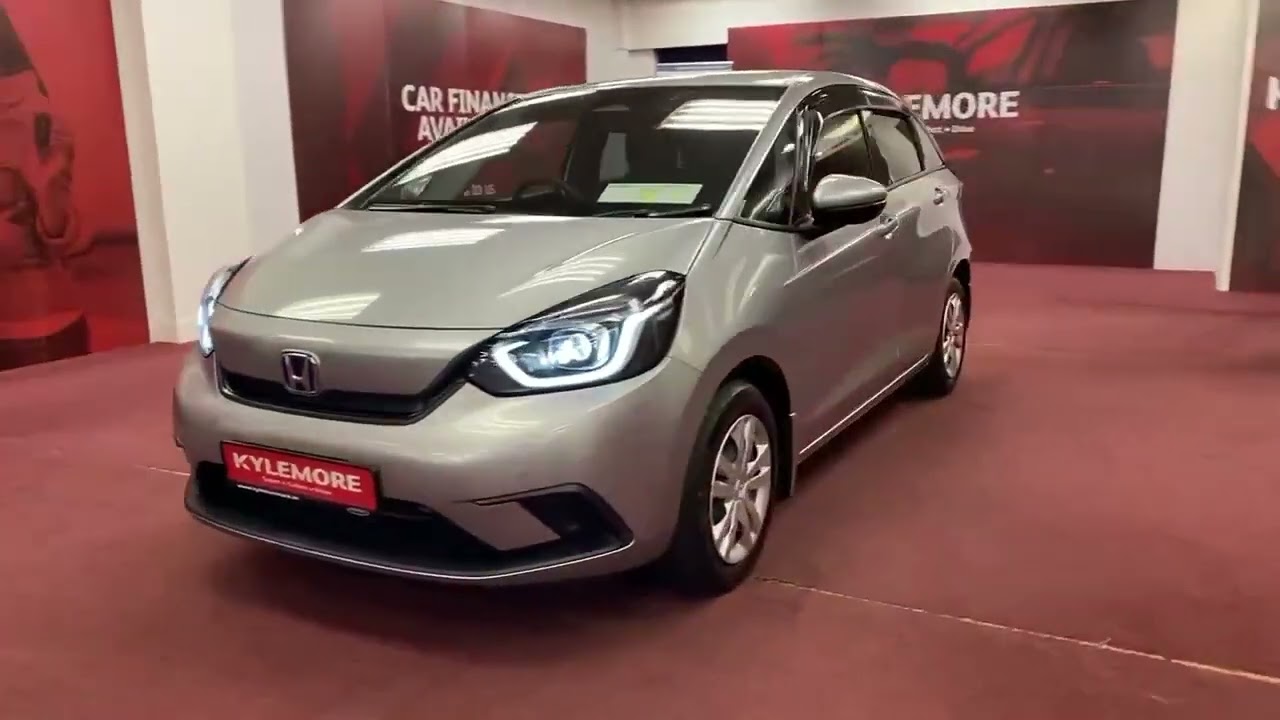
Compact city cars often force drivers to choose between fuel efficiency, interior space, and comfort. Most feel like a compromise. They are easy to park, but cramped or rough on city roads. The 2020 Honda Fit e:HEVSouls Credit , however, stands out. It combines ride quality and versatility in an unexpectedly well-balanced package.
This is not just another hybrid hatchback; it demonstrates expertise in urban engineering. From its notably roomy cabin to its refined suspension, the Fit e:HEV—or Jazz, as known in some markets—can be considered a quiet standout in the segment. We recently conducted an in-depth review of the “Home” package variant of this Sky Blue model, focusing on real-world performance and daily comfort to assess its merits. Our findings revealed awe-inspiring performance on rough terrain and the effectiveness of interior space.
Before diving into the details, it’s worth noting the philosophy behind our assessment. Cars are not merely tools; they are extensions of our daily lives. A successful city car must therefore excel in the areas that matter most: comfort, visibility, and practicality. The 2020 Fit e:HEV achieves an unprecedented harmony across these areas, suggesting that Honda engineers truly went back to the drawing board to optimize the vehicle for the demands of 21st-century drivers and passengers.
Performance and Market Positioning: Beyond the Spec Sheet
The Fit e:HEV doesn’t attempt to win races, but it is engineered to win the battle for efficiency and refinement. Its designation, e:HEV (Hybrid Electric Vehicle), indicates that it utilizes both a gasoline engine and an electric motor to conserve fuel and provide a smooth driving experience. Understanding where the Fit sits in the market helps explain its achievements.
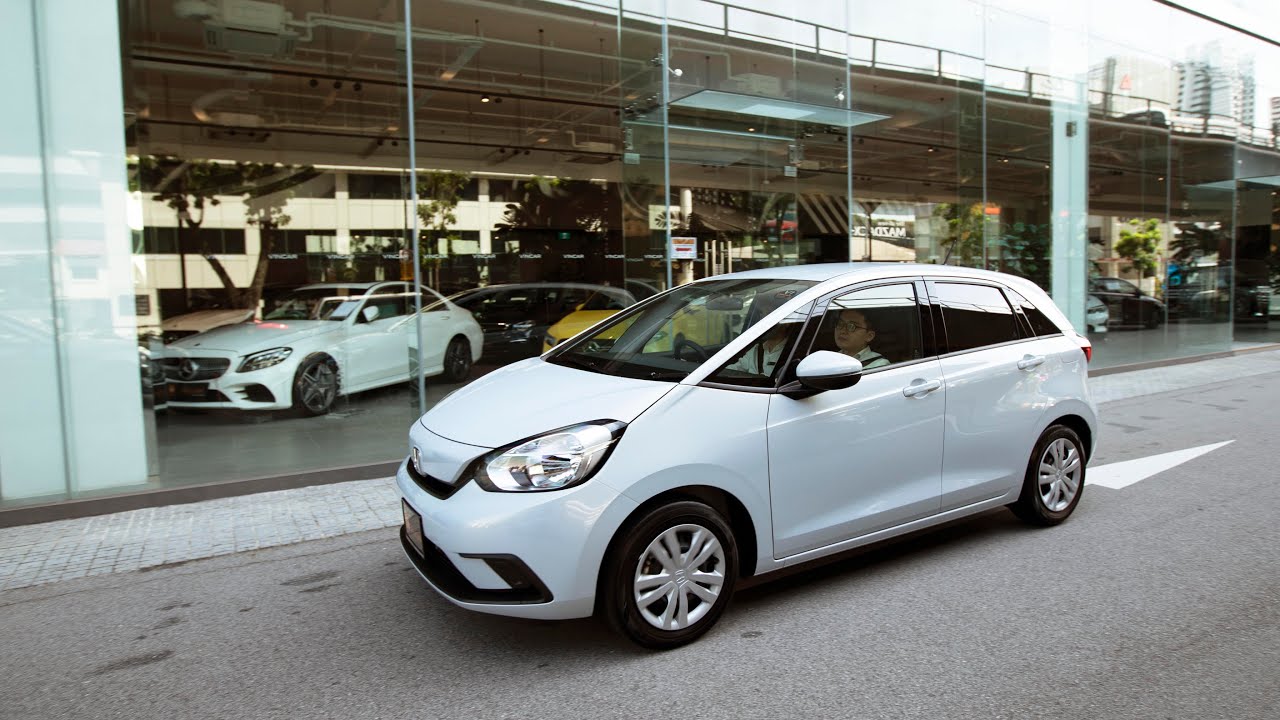
A Hybrid Battle: Fit vs. Aqua
In the compact hybrid segment, the Toyota Aqua is a recognized competitor. However, a direct comparison reveals a clear difference, particularly in terms of interior volume. As observed, the Fit e:HEV offers notably more space than its direct competitor, which is essential for daily usability, whether transporting passengers or cargo. This advantage in space signifies a design that prioritizes human-centered considerations over solely performance metrics.
The car’s size is subtly misleading. The exterior maintains a compact, manageable form, well-suited for navigating city streets and parking in tight spaces. Upon entering, the cabin architecture feels substantially larger than the exterior suggests. This execution is a primary distinction for the Fit, offering a sense of openness more commonly associated with larger vehicles. Careful packaging ensures the hybrid batteries and mechanical components do not intrude on passenger space.
Furthermore, the Fit e:HEV is offered in various packages, including Basic, Home, and Lux. Our featured model, the Home package, is well-equipped from the start. The top-tier Lux package typically adds desirable features, such as alloy wheels and LED fog lights, allowing buyers to strike a balance between luxury and budget. Regardless of the trim, the core engineering advantages—space and ride comfort—remain consistent across the lineup.
Under the Hood: The e:HEV System and Efficiency
The heart of the 2020 Honda Fit is its advanced 1.5-liter four-cylinder engine [06:13], paired with an electric motor system. Together, they generate 127 Newton-meters of torque and use an e-CVT gearbox. Here, e-CVT stands for Electronic Continuously Variable Transmission, a type of automatic transmission controlled electronically for smooth gear changes. In most hybrids, the electric motor mainly supports the gasoline engine. In contrast, the Honda e:HEV system often works as a series hybrid: at low speeds and up to about 100 km/h (about 62 mph), only the electric motor drives the car, while the gasoline engine acts as a generator, supplying power to recharge the battery. This design dramatically improves fuel efficiency.
The official figures are impressive, but real-world performance is what truly matters. Achieving fuel efficiency of “20 kilometers per liter plus” in city driving means the car travels over 20 kilometers on one liter of fuel. On highways, “30 kilometers per liter plus” indicates the vehicle can exceed 30 kilometers per liter of fuel used. These figures are notable for a vehicle of this class, providing substantial savings and reducing the frequency of refueling. Acceleration is described as “decent”—a typical characteristic of cars with a continuously variable transmission (CVT) in a hybrid system, where the focus is on maximizing fuel efficiency while maintaining adequate responsiveness. The transition between electric and gasoline power occurs automatically and smoothly, resulting in a quiet ride and enhancing the overall sense of refinement.
Exterior Design and Technology Integration
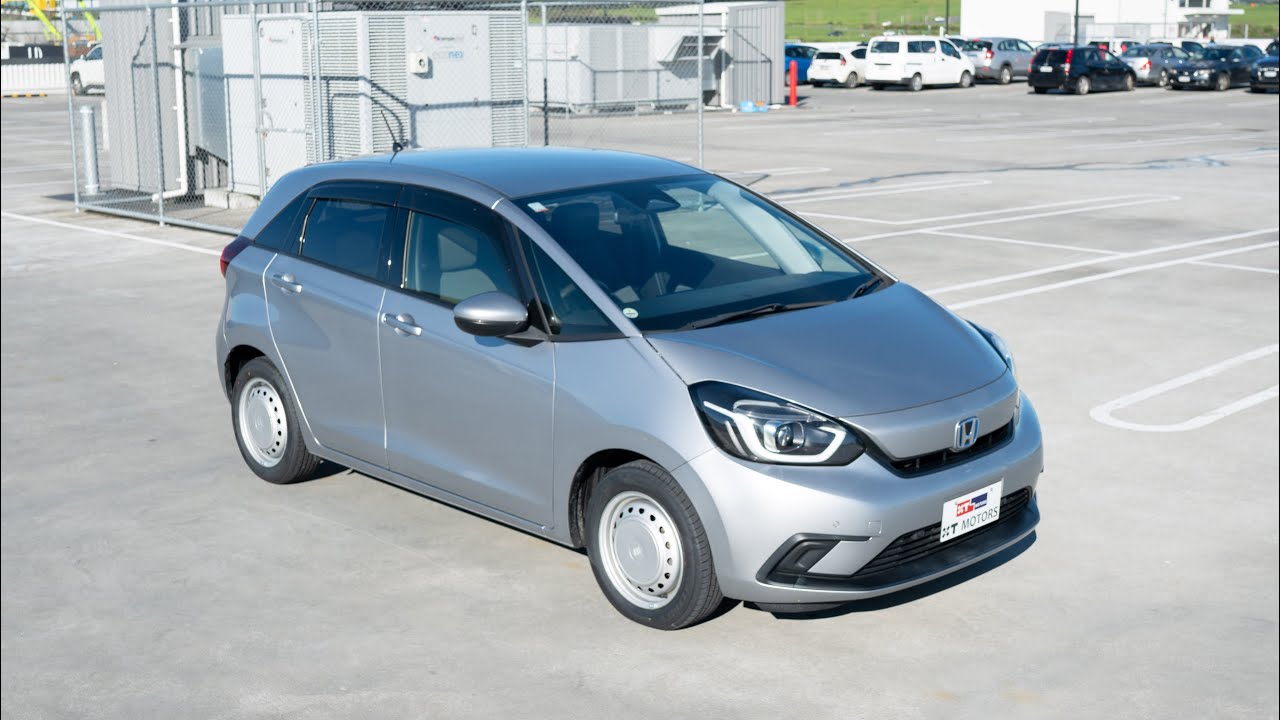
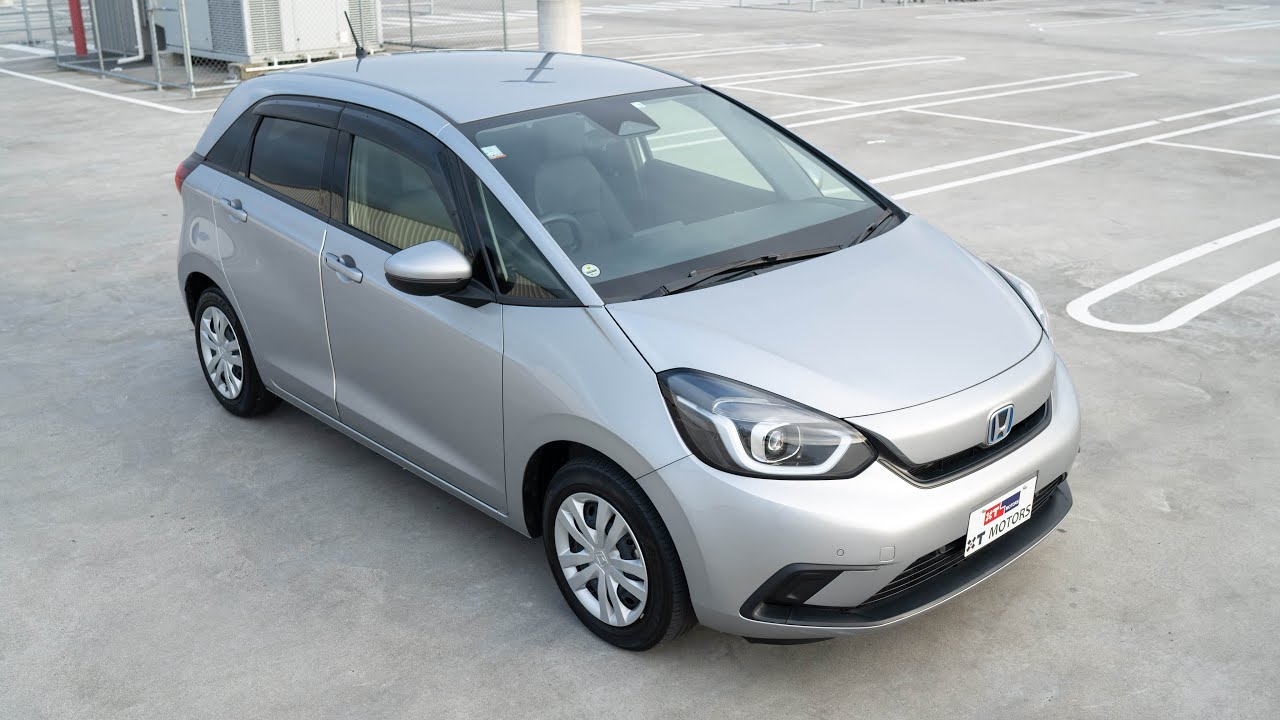
The 2020 model represents a design evolution for the Fit, adopting a cleaner, simpler, and cohesive appearance. The Sky Blue exterior of the reviewed model is distinctive, enhanced by practical design decisions. Key components include a radar camera supporting the Honda Sensing suite, a collection of safety and driver-assistance technologies. This suite incorporates adaptive cruise control, lane-keeping assist, and collision mitigation braking, further elevating the vehicle’s safety profile.
Illumination is handled by projection LED headlights, which combine both low and high beams into a single bulb, offering crisp, bright light while maintaining a sleek design. Other exterior details reinforce its hybrid identity, such as the blue accent on the Honda badge. The vehicle maintains a compact yet aggressive stance, riding on 15-inch wheels [03:11], which, in the case of the Home package, utilizes bright wheel caps instead of alloys. Functionality is further enhanced by four parking sensors on both the front and rear bumpers, a feature that proves invaluable in tight city parking scenarios. Overall, the exterior design successfully balances aesthetic appeal with practical necessity, setting the stage for the vehicle’s most lauded feature.
The Ride Quality Revolution: Suspension That Defies Class
A key and notable aspect of the 2020 Honda Fit e:HEV is its suspension system. Compact cars, due to short wheelbases and lighter construction, often allow road surface imperfections to be strongly felt inside the cabin. The Fit e:HEV, however, surpasses these expectations, delivering a ride quality that is frequently described as highly refined.
The Mind-Blowing Comfort and Composition
From the moment the car encounters its first significant bump, the difference is noticeable. The suspension has been tuned to provide a composed, almost “heavy car” feel, suggesting substantial damping and a sophisticated component setup. Damping refers to the way the suspension absorbs bumps, preventing ongoing bouncing. This heavy feeling is a significant compliment, as it translates directly into stability and comfort, absorbing bumps and potholes with remarkable ease. The reviewer noted that even major road imperfections resulted in “No feeling at all.” (absolutely no feel) inside the cabin.
This composure is especially evident when the car encounters repetitive bumps or uneven surfaces. Unlike many lightweight cars that continue to “bounce back,” the Fit’s suspension system demonstrates superior damping, settling the vehicle immediately after a displacement. This characteristic is typically found in much larger, more expensive sedans or SUVs, which are designed for highway cruising. To find this level of refinement in a compact hatchback intended for city use is a clear demonstration of Honda’s engineering priority for passenger comfort.
The suspension’s performance on rough roads is not just about comfort; it’s about maintaining control. Even when taking turns, the car feels planted and secure, with no sense of sliding or losing control. This contributes to driver confidence and a safer overall driving experience, transforming the daily commute from a jarring necessity into a surprisingly serene journey.
Ground Clearance: Paper vs. Practice
On paper, the Honda Fit e:HEV’s 5.3-inch (approximately 13.5 cm) ground clearance might sound concerning for areas with poor infrastructure or large speed bumps. Yet, this is another area where the car’s practical execution far exceeds its specifications. As observed during a test drive that included negotiating numerous uneven surfaces, the car handled challenging terrain without scraping, even with two passengers aboard.
The combination of a well-engineered suspension, a compact wheelbase, and smart approach/departure angles allows the vehicle to clear obstacles that its published ground clearance might suggest it would fail to clear. The reviewer highlighted this discrepancy as one of the major surprises of the car, confirming that potential buyers should not be deterred by the number alone. For those operating the car under heavy loads, adding high spacers or bumpers is an option, but for standard family and office use, the clearance proves to be more than adequate.
Braking and Handling Dynamics
Complementing the superb suspension is a braking system that inspires equal confidence. The Fit e:HEV comes equipped with four-wheel disc brakes, which deliver a progressive and reliable stopping performance. The braking feel is described as “progressive.” In this context, progressive means the driver experiences gradually increasing braking force as they press the pedal, which prevents jarring stops and adds to the car’s overall sophisticated feel. The tuning of the ABS (Anti-lock Braking System)—which prevents the wheels from locking up during hard stops—and associated technical components is considered “perfect” for this class of vehicle.
Furthermore, navigating tight city spaces is made easier by the vehicle’s excellent turning radius [19:48]. For a compact car whose primary domain is the urban jungle, a tight turning circle is a non-negotiable feature, and the Fit e:HEV delivers one of the best in its segment, ensuring effortless U-turns and easy maneuverability in crowded areas. This combination of comfortable ride, confident braking, and agility completes the vehicle’s profile as an outstanding city driver.
The Magic of Space: Cabin Utility and Design
Honda has long been celebrated for its ‘Man Maximum, Machine Minimum’ philosophy, and this is perhaps nowhere more evident than in the interior of the 2020 Fit e:HEV. The company’s engineering efforts were laser-focused on extracting every last inch of usable space, resulting in a cabin that feels “airy and open” despite the car’s small exterior dimensions.
Honda’s Ultra Seat System
The single greatest feature contributing to the Fit’s legendary utility is the ‘Ultra Seat’ system. The 60/40 split rear seats are not just capable of folding flat, creating an almost completely flat load floor for carrying long items, but they possess an even more clever “trick.” The rear seat bases can actually be flipped up and locked against the seatbacks, creating a massive vertical cargo space directly behind the front seats. This unique configuration is perfect for storing tall, awkward items like plants, large luggage, or even bicycles without having to lay them on their side.
This dual-utility mechanism effectively addresses the initial critique of the small trunk space. The reviewer was quick to point out that any perceived lack of boot space is entirely offset by this extraordinary flexibility. The capacity to convert the rear cabin into a comfortable passenger area area to a massive, versatile cargo hold in mere seconds is an engineering marvel and a significant selling point for anyone requiring maximum practicality from a minimal footprint.
Driver’s Cockpit: Ergonomics and Tech
The driver’s cabin follows a thoughtful and visually appealing design ethos, combining black and white accents with soft-touch leather portions on the dashboard. The layout is highly ergonomic, prioritizing driver focus and ease of use. The steering wheel, wrapped in soft, comfortable leather, is complemented by a fully digital driver display. This bright, futuristic display provides all necessary driving information at a glance, further reducing the need for the driver to take their eyes off the road.
A standout feature is the control system. Recognizing the importance of tactile feedback for driver safety, Honda designed the air conditioning controls as physical knobs with a satisfying tactile feel. When the AC is engaged, an ambient light ring illuminates around the control [11:25], a small but significant touch that enhances the premium feel. The decision to use knobs and buttons for essential functions, rather than burying them in a touchscreen menu, is a design philosophy that should be standard industry-wide, as it allows the driver to make adjustments without taking their eyes off the road.
For connectivity, the central display (in this model, a Gathers unit) features a USB-A port, enabling seamless integration of smartphone functions through Android Auto and Apple CarPlay. The cabin also provides practical storage solutions, including well-placed cup holders, a discreet storage area beneath the infotainment unit, and a glove box, all of which contribute to a functional and uncluttered environment.
Comfort Concerns and Wins
The seating itself is a mixture of high comfort and one peculiar anomaly. The seats—half-leather with a comfortable fabric center are exceptionally comfortable, providing good support for long drives. However, a strange observation was made regarding the headrests: the rear headrests, despite being fabric, were noted to be surprisingly “hard” . While a minor point, it stands in stark contrast to the otherwise plush and thoughtful seating design.
Conversely, a major win for driver and passenger comfort is the natural lumbar support found in the front seats. Even without a dedicated lumbar adjustment feature, the seatback’s curvature provides a naturally raised portion in the lumbar region, offering excellent and comfortable back support. This subtle, yet critical, design choice underscores the vehicle’s emphasis on long-term comfort, ensuring the driver and passengers remain relaxed, regardless of the journey’s length.
Final Verdict: The SH Rating and Who Should Buy It
After a thorough examination of the 2020 Honda Fit e:HEV’s performance, utility, and comfort, the reviewer utilized a four-category rating system (SH Rating) to encapsulate the car’s overall appeal. The scores reflect a car that, while not flawless, excels in the areas that define a truly great city vehicle.
The final ratings awarded were:
Exterior Design: 7/10
Interior Fit & Finish: 8/10
Passenger Ride Comfort: 8.5/10
Driving Impression: 8.5/10
This resulted in an overall rating of 8.0. The scores clearly highlight the car’s strength: the exceptional experience it provides to those inside, both the driver and the passengers. The high marks for comfort and driving impression confirm that the exceptional suspension tuning and ergonomic design are the vehicle’s primary triumphs.
The question then becomes: who is this vehicle for? The 2020 Honda Fit e:HEV is unequivocally the ideal choice for family use and city commuting. Its compact size makes it effortless to maneuver and park, while the massive, flexible interior space means it can handle school runs, grocery trips, and even the occasional furniture haul with equal ease. For those seeking a vehicle that offers best-in-class fuel efficiency, supreme comfort over rough roads, and unmatched cabin versatility in a small package, the Fit e:HEV is a formidable contender.
We strongly recommend that any potential buyer, particularly those currently considering competing hybrid models, take the time to test drive a Honda Fit e:HEV . Only by experiencing its composed, “mind-blowing” suspension and the practical magic of its Ultra Seat system can one truly appreciate how this compact hatchback redefines the expectations of its segment. The 2020 Honda Fit e:HEV is more than just a car; it’s a meticulously engineered solution to the complex demands of modern urban driving.
